

 Language
 русский
 中文简体
 Español


Can the industry cable reel be wall-mounted, ground-mounted or mobile
Applicability and advantages of wall-mounted installation
The wall-mounted installation of industrial cable reels is widely used in scenarios where space is limited or operational flexibility needs to be improved. Wall-mounted installation usually uses reinforced metal brackets or flange structures to firmly fix the cable reel to the wall, column or frame. This method can significantly save ground space and is suitable for environments such as automobile manufacturing, assembly lines, factory workshops, etc. that require overhead power supply or lifting tools.
Wall-mounted cable reels are mostly equipped with rotating arms or 360-degree rotating brackets, allowing operators to easily guide the cable to the work area, while the reeling process is smooth and not easy to tangle. Some models also have built-in cable guides to further improve the efficiency of use. Since the reel is installed in an aerial position, the cable naturally falls when in use, which can reduce cable wear and drag resistance and increase the overall service life.
Wall-mounted installation has certain requirements for wall strength, mounting bolt quality and reel weight bearing. It is recommended to fix it on the surface of concrete or steel structure to ensure long-term stability and safety.
Application scenarios and technical structure of ground installation
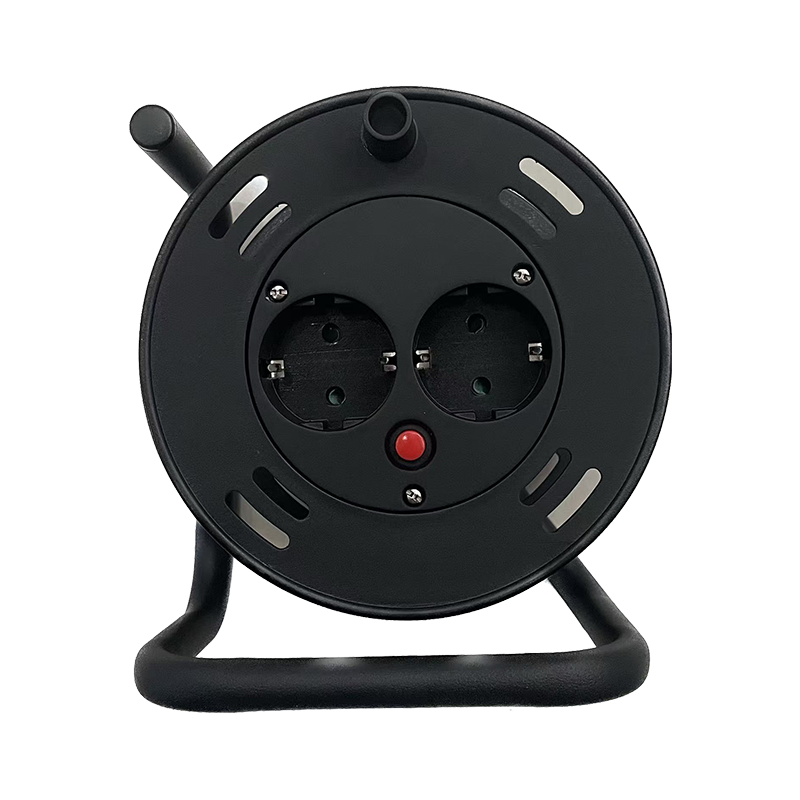
Ground installation is the most traditional and common installation method for industrial cable reels, suitable for heavy cables, high-power electrical equipment or fixed work area power supply occasions. The reel is generally fixed directly to the floor, platform or equipment base through the bottom flange bolts to ensure the stability of the structure, and can maintain balance and lasting stability even under high-frequency stretching and rewinding operations.
Most ground-type cable reels have reinforced bases, seismic design and non-slip foot pads, which can withstand large tension and heavy loads. This type of structure is suitable for high-intensity industrial application environments such as steel metallurgy, port terminals, power plant substations, and mining equipment.
Ground installation is easy to maintain and repair, and the cable replacement process is simple. It is suitable for automation systems that require long-term continuous operation or fixed area power consumption scenarios. Some models support double-side incoming lines and multi-cable side-by-side layout to enhance power supply capacity and scalability.
Flexibility and industrial adaptability of mobile installation
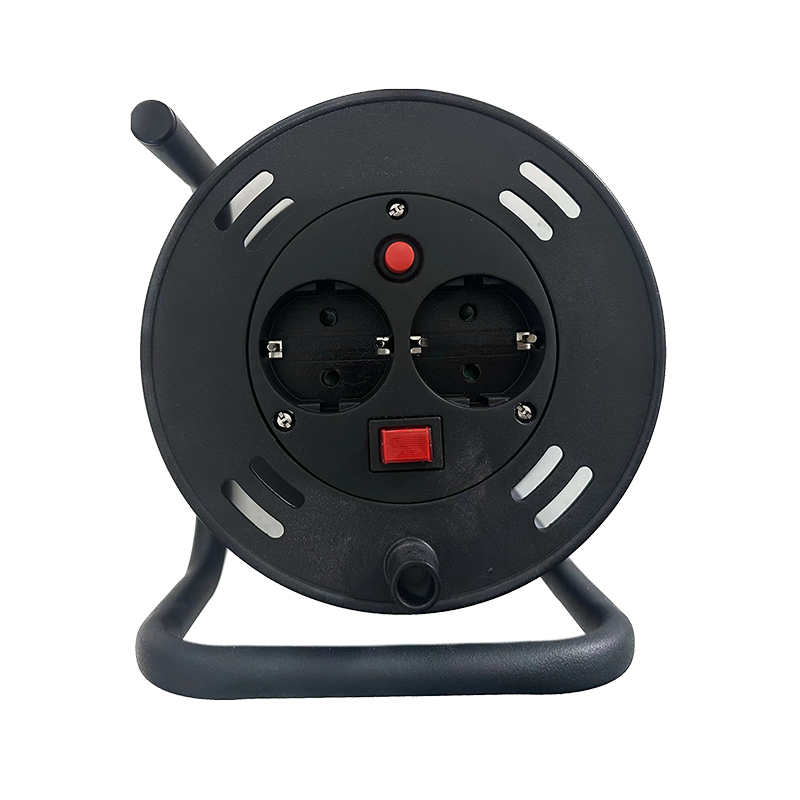
Mobile industrial cable reels are mainly installed on mobile platforms such as vehicle bodies, carts, tool cabinets, etc. with rollers or support chassis. This type of structure is very suitable for application environments that require frequent changes in work locations, such as construction sites, temporary power points, wiring in large venues, and storage and handling operations.
The mobile reel has a compact structure and usually has a brake locking wheel to prevent the mobile position from shifting during use. The equipment body is mostly made of lightweight and high-strength materials (such as aluminum alloy and polycarbonate mixed materials) to improve mobility and impact resistance. Some high-end models are also equipped with built-in power sockets or charging ports to further improve work efficiency.
Mobile reels are also commonly used in complex work sites such as military communication wiring, exhibition electrical deployment, and ship power conversion. Its flexible and changeable layout greatly improves the adaptability and operational freedom of industrial sites.
Modular design trend of multiple installation methods
Modern industrial cable reels are increasingly tending to modular and reconfigurable structures in design. Many products support interchange between wall-mounted and ground-mounted installations, and even have quick-install and quick-release interfaces, allowing users to quickly complete assembly and installation switching according to the on-site environment. Some high-end cable reel products also support the installation of guide wheel rails, lifting slide arms or electric slide rail systems to achieve three-dimensional wiring and dynamic power supply of the reel.
The modular structure not only improves the scalability and environmental adaptability of the cable reel, but also enhances the versatility of the equipment and the return on investment. The reel equipment invested by the user in one project can continue to be used in the next project by changing the installation method, reducing the overall cost of use.
The impact of installation method selection on cable life and safety
The installation method of the cable reel directly affects the service life of the cable and the safety of system operation. Reasonable selection of installation methods can effectively reduce problems such as small cable bending radius, dragging wear, winding and knotting, and extend the service life of the cable. At the same time, different installation methods also have differences in the reel body's reel tension, tensioning structure, reel balance design, etc., and need to be selected according to the actual cable type (power cable, control cable, optical fiber composite cable, etc.).
Wall-mounted installation is more conducive to reducing ground obstacles and human and vehicle interference. Ground installation is suitable for heavy operations and continuous power supply needs. Mobile installation is better than temporary and multi-site operations. Flexible deployment. Reasonable installation methods combined with accurate reel selection are the basis for ensuring industrial production efficiency and operational safety.