

 Language
 русский
 中文简体
 Español


Does the extension cord provide overload protection
What is an overload protection device?
An overload protection device is an electrical safety feature that automatically cuts off the power supply when the current exceeds the rated value. Its function is to prevent fires, wire fusing or electrical damage caused by overheating of the line. Common forms of overload protection include thermal fuses, thermal circuit breakers, reset switches and fuses.
Why do extension cords need overload protection?
Extension cords are often widely used in homes, construction sites, commercial and industrial occasions as temporary or long-term power connection devices. Users often connect multiple high-power appliances, such as electric heaters, induction cookers, power tools, etc., which can easily cause the total current to exceed the rated current carrying capacity of the extension cord. If there is no overload protection device, it may cause the line to overheat or even fire.
Requirements for overload protection in the standard
Multiple national electrical standards have clear requirements for the safety performance of extension cords. For example, the UL 817 standard (USA) stipulates that the rated current of the extension cord shall not exceed the wire carrying limit, and it is recommended to set a resettable overload protector. GB 2099.3 (China) and IEC 60884 standards also put forward overload protection requirements for extension cords and sockets. Extension cords with overload protection functions must pass temperature rise, current shock and thermal runaway tests during testing.
Working principle of extension cord overload protection
Extension cord overload protection devices are usually installed inside the socket module or in parallel with the power cord. Thermistor circuit breakers are one of the most widely used solutions. When the current exceeds the set value, the thermistor element heats up rapidly and disconnects the circuit, cutting off the power supply. Reset-type overload protectors can restore power manually or automatically after cooling, and are suitable for repeated use. The disposable fuse structure has a low cost, but parts need to be replaced, which is inconvenient to maintain.
Do all extension cords have overload protection functions?
Not all extension cords are equipped with overload protection devices. Basic or low-priced products usually do not have any protection functions, and only have wire connection and socket extension functions. Mid-to-high-end extension cords generally come with overload protection as standard, and some products also add short-circuit protection, leakage protection and surge suppression functions, which are multi-safety designs. Consumers need to pay special attention to product technical parameters and certification information when purchasing.
Importance in high-power load scenarios
In high-power load environments such as power tools, air conditioners, and water heaters, extension cords are prone to overload. If there is no overload protection device, the cable conductor continues to run at high temperature, which not only reduces the life of the conductor, but may also cause the shell to melt or the contacts to burn. Extension cords equipped with overload protection can interrupt the power supply before the critical current appears, avoiding accidents in time.
How to identify extension cord overload protection
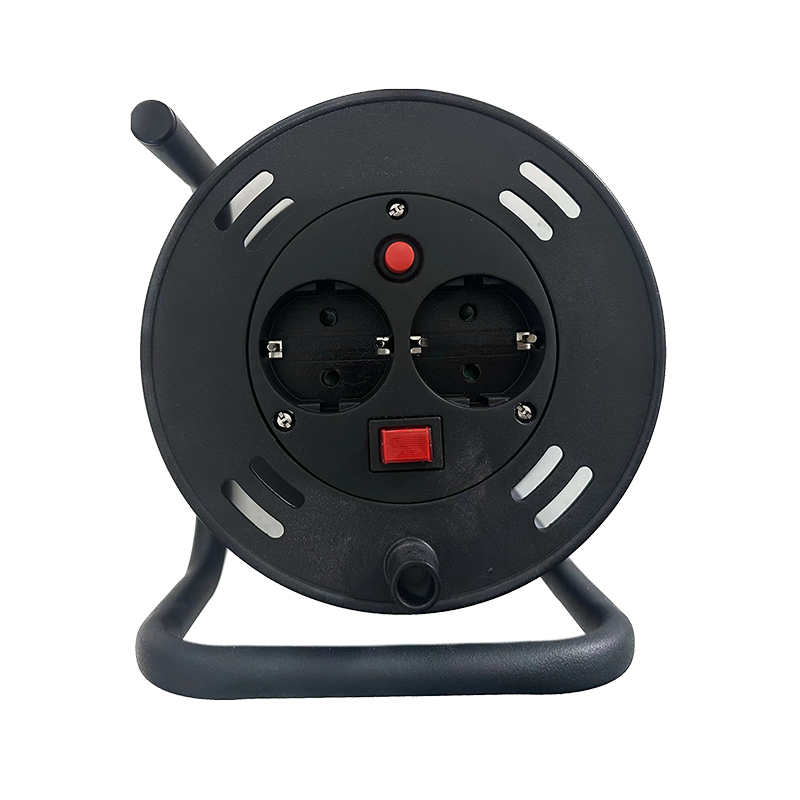
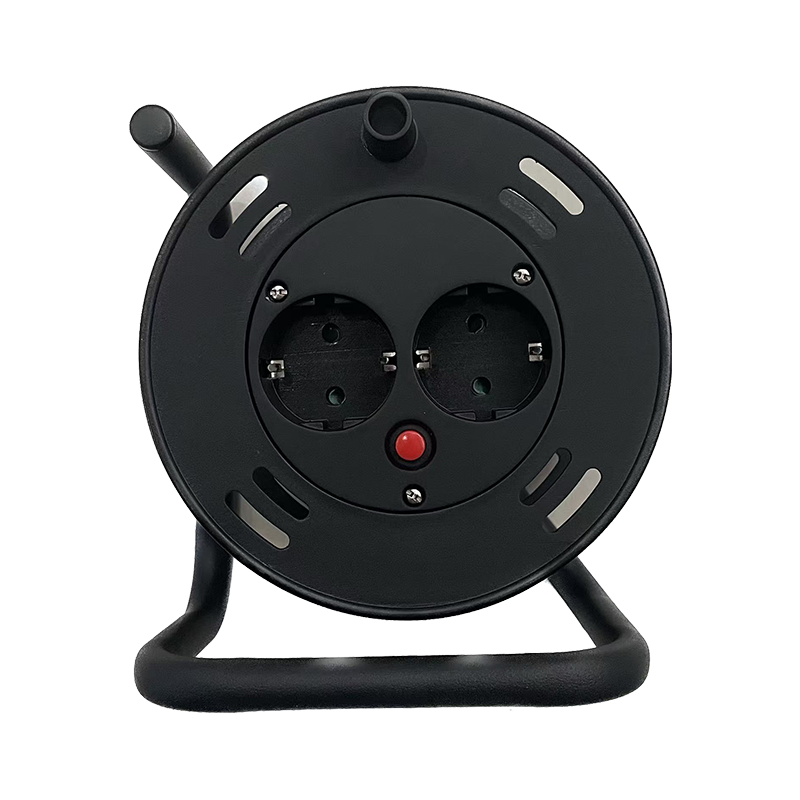
Extension cords with overload protection usually have a reset switch with a red or black button on the socket side. The outer packaging or nameplate should be marked with words such as "overload protection", "with circuit breaker protector", and "Overload Protection". Some high-end brands are also equipped with indicator lights to remind users of the current status, enhancing the user experience and safety perception.
Analysis of consumer misunderstandings
Some users think that the extension cord itself is "just a wire" and ignore its electrical protection function; other users frequently use inferior splitters and connect multiple extension cords in series, resulting in current superposition, which is very likely to cause overload. In addition, many people use extension cords for high-power electrical appliances before the reel is fully unrolled, which increases the heat accumulation inside the coil and increases the risk of accidents when overload protection is not equipped.
Differences between industrial and civilian applications
Industrial extension cords are often used in high-load scenarios and are usually equipped with safety designs such as overload protection, impact-resistant housing, waterproof plugs, and high-insulation conductors. Household extension cords focus more on aesthetics and convenience, but they should also be equipped with basic overload protection, especially in areas where multiple devices are centrally powered, such as kitchens and study rooms.
How to correctly choose extension cords with overload protection?
When purchasing, you should give priority to brand products with authoritative certification (such as 3C, UL, CE) and clearly marked rated power and overload protection specifications. Choose the appropriate wire cross-section and length according to the use environment to avoid using equipment that exceeds the rated power. Choosing models with overload reset buttons and visual indications can improve the level of power safety.