

 Language
 русский
 中文简体
 Español


How Much Power Can a 16 Amp Socket Handle? Complete Safety Guide for Electricians
A 16 amp socket is the quiet workhorse behind electric ovens, industrial power tools, EV charging cables and temporary site distribution. It is also one of the most misunderstood ratings in daily electrical work. In a workshop, a fitter connects a 3.5 kW oven, runs it for two hours, and touches a warm socket. In a warehouse, a maintenance engineer sees a breaker trip at exactly the moment a heavy compressor starts. Both practitioners ask the same question: how much power can a 16 amp socket handle?
The short answer, calculated from the basic power formula, is 3,680 W on a 230 V single-phase supply, 1,760 W on a 110 V supply, and around 10.5 kW when wired three-phase at 380 V. But that is the theoretical ceiling. The safe continuous load, the number you should plan around, is 80 percent of those values: about 2,944 W for 230 V single phase, 1,408 W for 110 V, and 8.4 kW for 380 V three-phase. This article explains the calculation behind those figures, why the derating rule matters, how cable length affects the usable power, and how to select 16A plugs, sockets and extension cords that will stay safe under real working conditions.
The Short Answer: How Many Watts Can a 16 Amp Socket Handle?
If you only need one number, use the theoretical maximum for short-duty equipment and the continuous safe load for anything that runs longer than three hours. The rating printed on the socket is a current rating, so the actual power depends on the supply voltage and the load power factor.
For a single-phase 230 V supply, the calculation is simple: 230 volts multiplied by 16 amps equals 3,680 watts. For a 110 V supply, the same current gives only 1,760 watts. For a three-phase 380 V supply, the formula becomes 380 volts multiplied by 16 amps multiplied by the square root of three, which gives approximately 10,530 watts. These results assume a purely resistive load with a power factor of one. When motors, switching power supplies or other reactive loads are involved, the real power available for the same current is lower, so the socket does not automatically deliver more usable output.
Where the Rating Comes From: Current Limits and Thermal Reality
A socket is rated in amps because the most critical limitation is heat generation inside the contacts, terminals and connecting cable. When current flows through a junction, the contact resistance converts electrical energy into heat. The heat rises with the square of the current, which means a small increase from 16A to 18A produces roughly 27 percent more heat in the same joint. The socket manufacturer designs the contact geometry, spring pressure and material thickness to keep the temperature rise within the limits defined by IEC 60884, IEC 60309 and similar product standards at the rated current.
This explains why the theoretical power limit is not a recommendation to run continuously at that level. A 16A socket connected to a 230V supply can physically transfer 3,680W, and it will do so for short periods without immediate failure. But every connection in the path, the plug pins, the socket terminals, the cable conductors and the circuit breaker, contributes to a chain of thermal resistance. If any part of that chain is worn, undersized or loosely terminated, the weakest link runs hotter than the rest and accelerates the failure process. Oxidation, carbon tracking and loss of spring tension follow, which increases contact resistance even further. That is why electrical standards and experienced installers prefer to keep continuous loads below the printed rating.
In practical terms, a 16A socket on a 230V circuit should be treated as a 3.0 to 3.4 kW socket for equipment that runs for long periods, even though the nameplate suggests 3.68 kW. Devices that run intermittently, such as a table saw that cycles on and off, can safely draw closer to the full 16A because the average heat buildup is lower.
Voltage Level Determines the Real Power
The same 16A socket cannot be described by a single wattage because the power it delivers scales linearly with system voltage. A 16A circuit in a European 230V installation moves three times more energy than a 16A low-voltage 110V construction supply. In the United States and Canada, residential receptacles are typically rated 15A or 20A at 120V, so a socket marked 16A is more often found in industrial low-voltage systems or in three-phase CEE installations rather than in standard household walls.
| Supply system | Nominal voltage | Theoretical maximum | Recommended continuous (80%) |
|---|---|---|---|
| 230V single phase (EU, UK, Australia, much of Asia) | 230V | 3,680 W | 2,944 W |
| 110V single phase (industrial low-voltage) | 110V | 1,760 W | 1,408 W |
| 120V single phase (North American 20A class) | 120V | 1,920 W | 1,536 W |
| 380V three-phase (industrial, China, parts of Europe) | 380V | 10,530 W | 8,424 W |
| 400V three-phase (modern European industrial) | 400V | 11,085 W | 8,868 W |
The chart below visualizes the same relationship. A 16A socket carries the same current in all four cases, but the power it can supply to the load changes dramatically with voltage and phase configuration. This is why a socket size alone never answers the question: the supply type must be stated first.
For a manufacturer of industrial plugs, sockets and extension cords, this voltage dependence is not an academic detail. The same 16A CEE socket body is used in 110V site lighting, 230V single-phase machinery and 400V three-phase distribution, and each application has a very different power envelope. Users who calculate their load in watts must therefore always check the system voltage before selecting a socket or extension cord.
Continuous Load and the 80 Percent Derating Rule
The 80 percent rule is one of the most useful safety margins in electrical design. It states that a circuit should not be loaded above 80 percent of its rated current for more than three continuous hours. This rule appears in the National Electrical Code for continuous loads and in European installation practice through the use of correction factors for grouping, ambient temperature and installation method. For a 16A socket, the 80 percent limit works out to a continuous current of 12.8A, which on a 230V single-phase supply equals 2,944W.
Why three hours? Thermal time constants in cable, terminals and breakers mean that a loaded conductor reaches a stable temperature only after an extended period. A device that runs for twenty minutes cools down in the natural pauses of the working cycle, so its average temperature stays far below the steady-state value. A device that runs for four hours, such as an electric oven in a commercial kitchen, a fan heater, a compressor or an EV charger, forces every joint to reach its full thermal equilibrium. If the load sits at 100 percent of the socket rating, the equilibrium temperature may exceed the safe insulation class of the cable or the rated temperature of the socket contact.
There is also a practical longevity argument. Every electrical connection undergoes thermal cycling as it heats and cools. The different coefficients of expansion in brass contacts, steel spring elements and copper conductors gradually reduce contact pressure. A connection that operates at 80 percent load experiences significantly lower peak temperature and slower cycling, which translates into a longer service life and fewer unexpected failures. Industrial sockets in production environments are routinely plugged and unplugged hundreds of times, and the combination of mechanical wear and thermal stress is what ultimately determines their working life.
Consider a 3.0 kW electric oven connected to a 16A socket on a 230V supply. The current draw is approximately 13A, which is 81 percent of the socket rating and 102 percent of the continuous threshold if the oven runs non-stop. In reality, ovens cycle their heating elements through a thermostat, so the average current over an evening is much lower than the connected load. However, a 3.5 kW oven draws 15.2A, which is 95 percent of the rating and 119 percent of the continuous threshold. That is genuinely marginal, and the socket, cable and breaker must all be in first-class condition. If any extension cord is involved, the margin disappears completely without a thicker cable.
Circuit Protection and Cable Sizing for a 16 Amp Circuit
A socket is only as safe as the circuit behind it. A 16A socket must be protected by a 16A overcurrent device, normally a miniature circuit breaker of type B or type C. Type B breakers trip between 3 and 5 times the rated current and suit lighting and resistive loads. Type C breakers trip between 5 and 10 times the rated current and suit inductive loads such as motors and compressors where the starting current is briefly much higher than the running current. Installing a 16A socket on a 20A breaker removes the protection the socket was designed for, and installing a 10A breaker causes nuisance trips under normal 16A operation.
Cable cross-section is the second pillar of the installation. For a fixed wall socket on a 16A circuit, 1.5 mm² copper conductors are the minimum allowed under many European wiring regulations for short, well-cooled runs in conduit. However, 2.5 mm² is the recommended standard because it provides more headroom for ambient temperature, grouping with other cables and future load changes. For portable extension cords, the flexible cable rating is just as important: a 1.5 mm² H05VV-F or H07RN-F cord can carry 16A only when it is fully unwound, free from thermal insulation and operating at room temperature. A 2.5 mm² cord provides a wider margin and is preferred for industrial extension cords that get coiled, walked on and exposed to heat.
| Conductor size | Installation method | Typical ampacity | Recommended use |
|---|---|---|---|
| 1.5 mm² | In conduit, clipped direct | 15.5 to 18.5 A | Short fixed branch circuit up to 16A |
| 2.5 mm² | In conduit, clipped direct | 21 to 27 A | Preferred for 16A fixed circuits |
| 1.5 mm² H05VV-F / H07RN-F | Free air, portable | 16 to 18 A | Short extension cords up to 10 m |
| 2.5 mm² H05VV-F / H07RN-F | Free air, portable | 20 to 25 A | Industrial extension cords beyond 10 m |
Every 16A socket that may be used to supply portable equipment should also sit behind a residual current device. In residential and construction installations, RCD protection is required by modern wiring regulations for socket outlets. Outdoor sockets and sockets used on building sites should have an IP44 or higher ingress protection rating. The combination of a correctly sized breaker, a 2.5 mm² copper conductor, a 30 mA RCD and a properly rated CEE industrial socket gives the user four independent layers of protection: overload, short circuit, earth leakage and mechanical endurance.
Voltage Drop on Long Extension Runs
The current-carrying capacity of a cable is not the only limit. Every metre of conductor has resistance, and that resistance consumes part of the voltage. The longer the extension cord, the less voltage actually reaches the tool or appliance. A 16A socket delivering power through a 50 m extension cord may deliver only 215V instead of 230V at the far end. Motors run hotter, heating elements take longer, and the conductor itself produces more heat because the same current flows through a higher total resistance.
The voltage drop is calculated with the following formula: voltage drop equals two times the cable length multiplied by the current multiplied by the resistivity of copper, divided by the conductor cross-section. Doubling the length accounts for the outward and return conductors. Copper resistivity is approximately 0.0175 ohm square-millimetres per metre. For a 16A load on a 230V circuit, the results demonstrate why cable thickness matters as distance grows.
| Cable size | One-way length | Voltage drop | Percentage of 230V | Assessment |
|---|---|---|---|---|
| 1.5 mm² | 10 m | 3.7 V | 1.6% | Acceptable |
| 1.5 mm² | 25 m | 9.3 V | 4.1% | Marginal |
| 1.5 mm² | 40 m | 14.9 V | 6.5% | Not recommended |
| 2.5 mm² | 25 m | 5.6 V | 2.4% | Acceptable |
| 2.5 mm² | 50 m | 11.2 V | 4.9% | Borderline |
| 2.5 mm² | 60 m | 13.4 V | 5.8% | Not recommended |
Western installation standards generally recommend keeping voltage drop below 5 percent for power circuits, and some industrial specifications are stricter at 3 percent. The table shows that a 1.5 mm² cord starts to run out of headroom at around 25 m, while a 2.5 mm² cord is still acceptable at 50 m. On a 110V supply, the same voltage drops represent double the percentage loss, which makes long low-voltage extension cords even more sensitive. We covered this relationship in detail in our article on how extension cord length affects voltage drop and current carrying capacity.
There is also a safety dimension to voltage drop. When a cable is undersized and the load draws near the circuit limit, the cable temperature rises in addition to the voltage being lost. The two effects reinforce each other: higher temperature increases the conductor resistance, which increases the voltage drop, which increases the current drawn by constant-power devices to maintain their output. This positive feedback loop is what makes an overheated extension cord feel warm along its entire length. A 16A socket should always be fed by a cable that can carry at least 20A, so that the conductor operates well below its thermal rating even when the socket is fully loaded.
Typical Applications for a 16 Amp Circuit
A 16A socket sits in a specific and highly useful band of electrical power: above the 10A domestic socket range and below the 32A industrial range. That position makes it the default choice for medium-power equipment that cannot run safely on a standard 10A outlet but does not justify a heavy three-phase connection.
Electric Ovens and Hobs
Built-in ovens and induction hobs in European kitchens commonly draw 3.0 to 3.7 kW. A 16A single-phase circuit with 2.5 mm² wiring and a dedicated socket is the standard solution. The user must check the appliance nameplate and confirm the total connected load of the oven plus any adjacent sockets on the same circuit.
EV Charging at Slow Speed
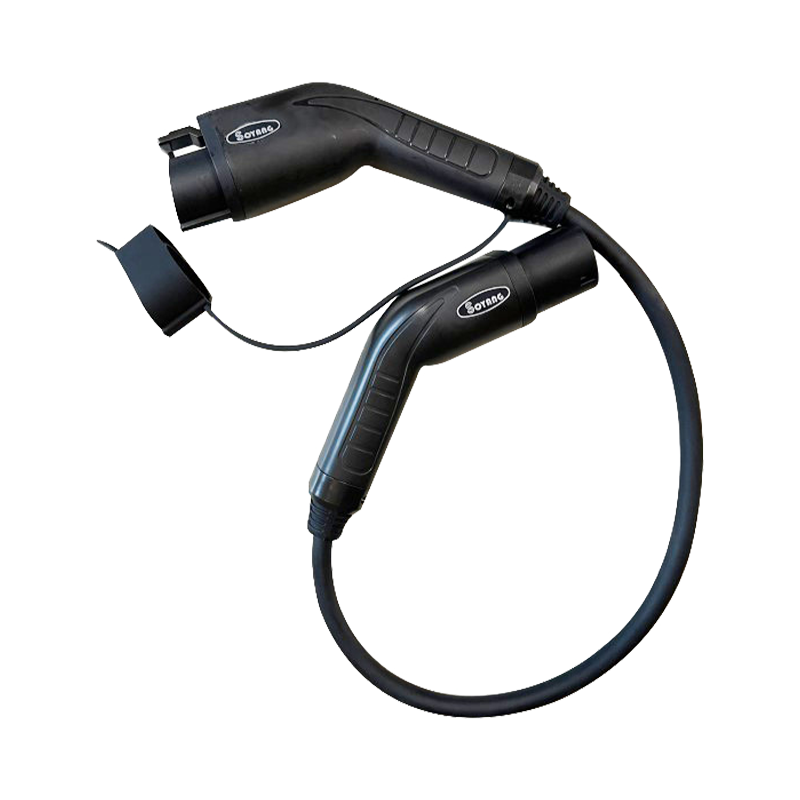
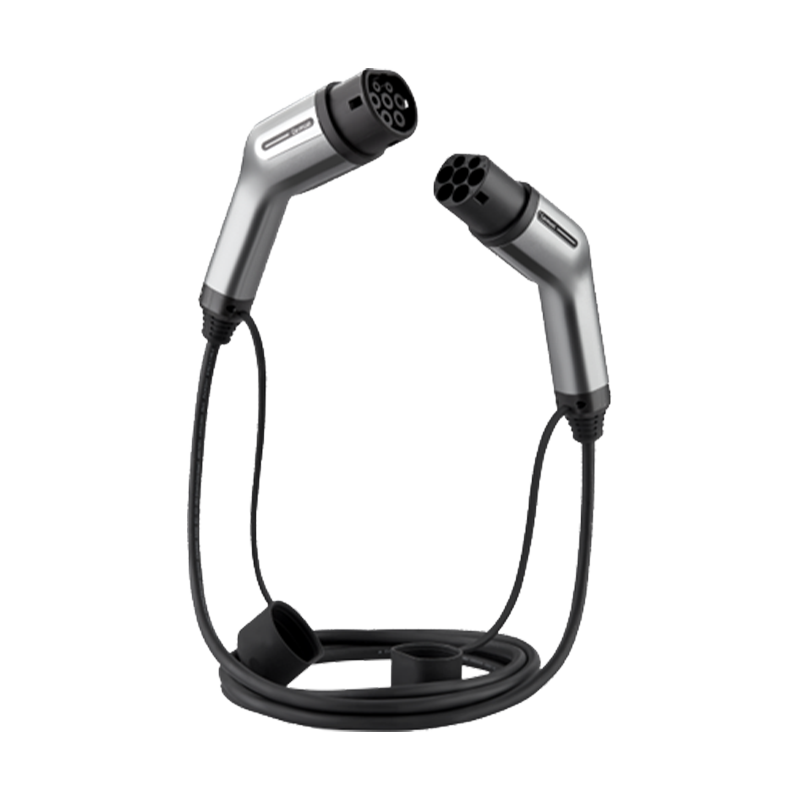
A portable EV charger connected to a 16A socket at 230V delivers approximately 3.68 kW, which adds about 20 to 25 km of range per hour of charging. This is slower than a dedicated wallbox but perfectly adequate for overnight charging. The socket should be dedicated to the charger and should not share the circuit with other high-load appliances.
Workshop Power Tools
Industrial circular saws, table saws, planers, large angle grinders and air compressors operate in the 1.5 to 3.0 kW range. A CEE industrial 16A socket provides a robust, vibration-resistant connection that is far more durable than a domestic plug when tools are connected and disconnected repeatedly throughout a shift.
Temporary Site Power and Events
Construction sites, outdoor events and maintenance crews use 16A CEE sockets to build small power distribution networks. A 16A inlet on a distribution board feeds multiple 16A outlets, each protecting a tool through its own breaker. The keyways on CEE connectors prevent a 230V device from being plugged into a 400V supply, which is a critical safety feature on multi-voltage sites.
The common thread across these applications is that the equipment runs for hours, gets moved around, and is often exposed to dust, moisture or mechanical bumps. These conditions are exactly what a CEE industrial socket is designed for, and they are the reason this article recommends industrial-grade components rather than household sockets whenever the installation will be used by more than one person or in a commercial environment.
Selecting the Right Plugs, Sockets and Extension Cords
Once the power calculation confirms that a 16A socket is adequate for the load, the next decision is which physical format to use. Household Schuko, French, British or Swiss sockets are rated up to 16A and work well for a fixed kitchen appliance. But for workshops, outdoor areas, construction sites and any application where the plug will be inserted and removed frequently, an industrial CEE socket to IEC 60309 is the safer and more durable choice.
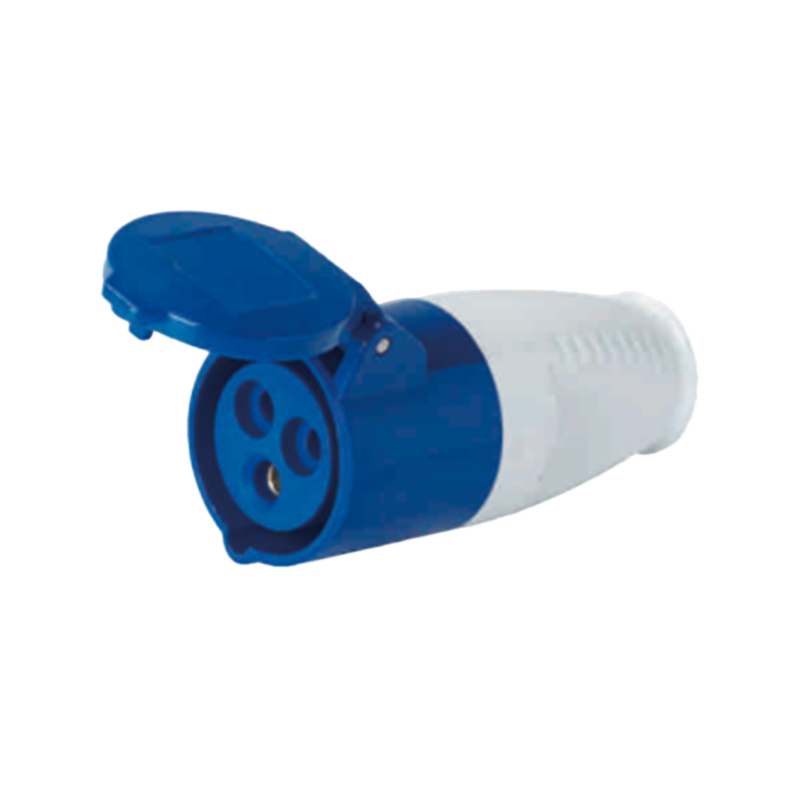 CEE 16A 230V Single-Phase Industrial Socket, Blue 6H KeywayThis IEC 60309 socket uses a 6-hour keyway and blue ring to identify 16A 230V single-phase supply, making it the correct choice for workshops and outdoor areas where a durable, high-frequency-connection outlet is needed.View Product →
A CEE industrial socket uses keyways around the circumference of the connector to encode the voltage, phase configuration and current rating. A 16A 230V single-phase socket has a 6-hour keyway position and is marked with a blue ring. A 16A 110V socket has a 4-hour keyway and is yellow. A three-phase 400V socket has a 9-hour keyway and is red. These colour and keying systems make it physically impossible to force a plug into a socket of a different voltage, which is an enormous safety advantage on sites where several voltages appear simultaneously.
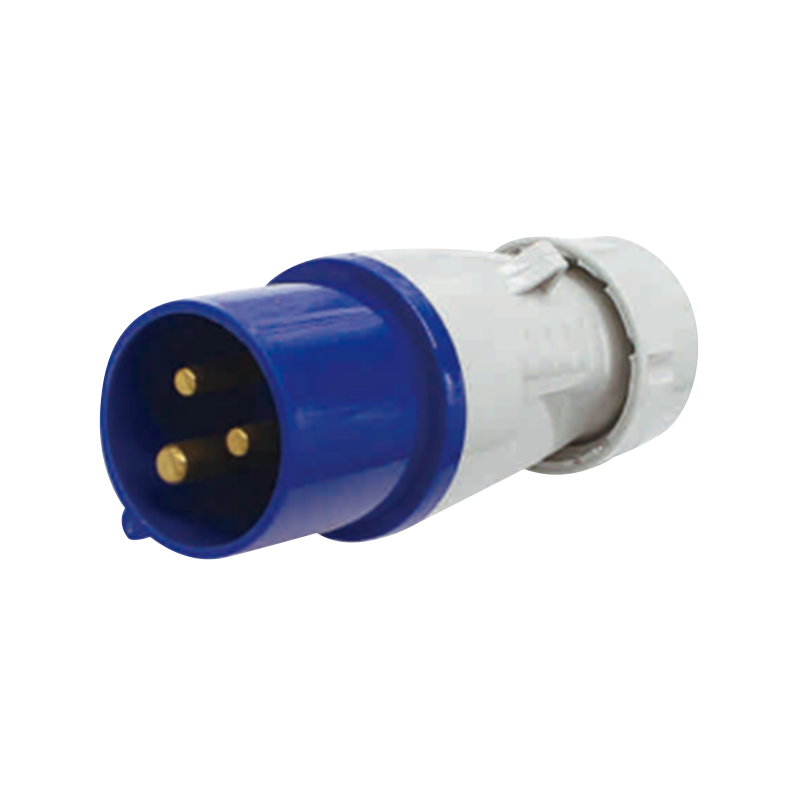 16A 6H CEE Industrial Plug, 2P+E, IP44 RatedA matching three-core plug rated 200-250V with a 6-hour keyway, designed to pair with the 230V CEE socket. Its IP44 protection suits frequent connection in demanding environments, supporting safe and reliable power delivery.View Product →
When assembling a 16A extension line, the plug and socket are only half of the equation. The flexible cable between them must be rated for the mechanical demands of the job. A rubber-sheathed cable such as H07RN-F resists water, oils and abrasion much better than a PVC-sheathed cord, which is why industrial extension cords use rubber construction even when the indoor environment looks benign. The cable should be fully unwound when carrying a 16A load, because a coiled cord acts as a heating element: the magnetic field around the coil and the trapped hot air both raise the conductor temperature above its rated limit.
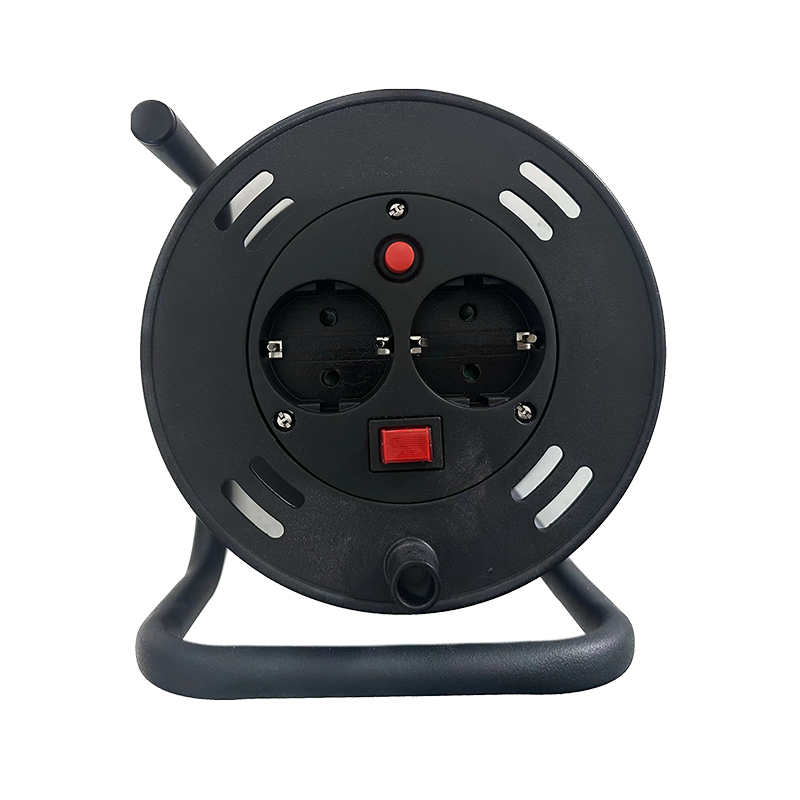
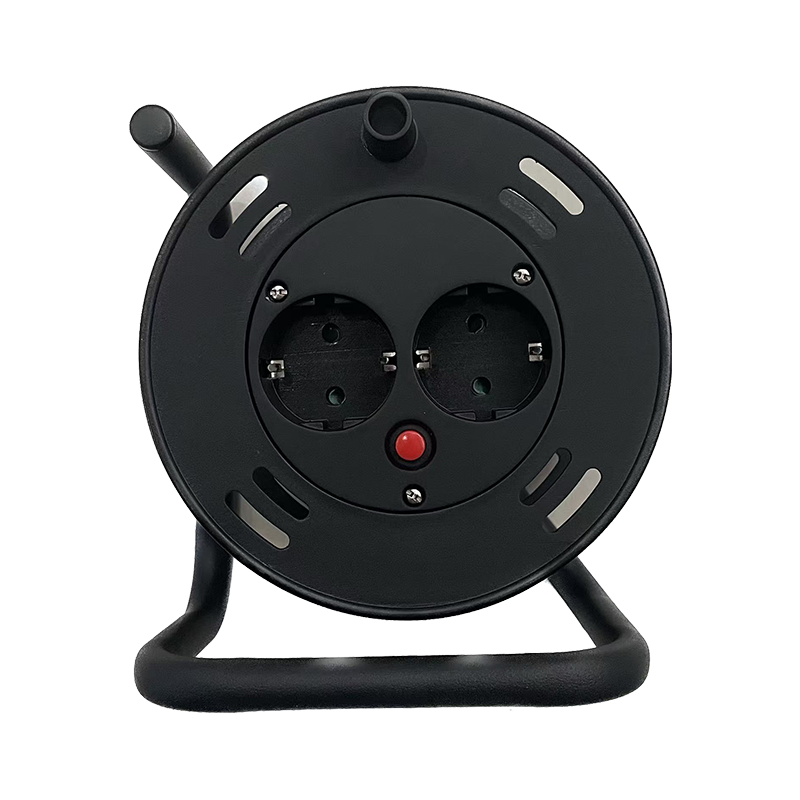
 16A 230V CEE Extension Cord with Socket and Plug, 2.5mm²This ready-made extension line combines a CEE plug, socket, and 3G 2.5mm² rubber-sheathed cable, offering a complete solution for high-load equipment. It provides weather resistance and mechanical durability for demanding worksites.View Product →
For anyone assembling a 16A power path, the practical checklist is simple: a CEE socket on the wall, a CEE plug on the cord, a 2.5 mm² rubber-sheathed flexible cable, and a matching appliance connector at the tool end. This combination gives full current capacity, weather resistance and the mechanical endurance needed in a working environment. Our guide on how to choose the right extension cord for high-load equipment walks through cable class, plug configuration and length ratings in more depth.
Inspection and Maintenance Routines
A 16A socket that is used every day deserves the same attention as any other safety-critical component. Most socket failures do not happen suddenly; they develop slowly through a combination of mechanical wear, heat cycling and contaminant ingress. A simple visual and tactile check performed at regular intervals catches the early warning signs before they turn into a circuit trip or a burn-out.
- Check the socket contacts and plug pins for burn marks, discolouration or pitting. A dull grey finish on a copper pin indicates that the connection has been running hot.
- Insert a test plug and feel the withdrawal force. A plug that falls out under its own weight has lost contact pressure and must be replaced.
- Inspect the cable sheath for cuts, cracks, flat spots and chemical damage. Bending the cable between the fingers reveals internal conductor breakage that is invisible on the outside.
- Verify the strain relief at both ends of an extension cord. Pulling on the cable should not move the internal terminals.
- Check that IP-rated covers and sealing rings are present and properly seated. A missing sealing ring in an IP44 socket turns water resistance into a moisture trap.
- Test the RCD every month by pressing the test button. An RCD that does not trip is the one protection device that cannot be seen in a visual inspection.
- Retighten the terminal screws inside fixed sockets once every year in industrial environments. Thermal cycling loosens connections over time.
Sockets operating in high ambient temperatures, dusty environments or outdoor installations should be inspected more frequently than the same socket in a climate-controlled indoor workshop. The same derating logic that applies to the load also applies to the duty cycle of the inspection programme: the harsher the environment, the shorter the interval.
Frequently Asked Questions
Can a 16A socket run a 3 kW oven continuously?
Yes, with careful attention to the rest of the circuit. A 3 kW oven on a 230V supply draws about 13A, which is 81 percent of the socket rating. The oven thermostat cycles the heating elements, so the average current is lower than the connected load. For continuous operation, the socket should be in good condition, the circuit should be protected by a 16A breaker and the wiring should be at least 2.5 mm². A 3.5 kW oven draws 15.2A and leaves very little margin, so it should only be fitted to a dedicated circuit with no other loads.
What happens if I draw more than 16A from a 16A socket?
The current exceeds the design limit of the contacts, and the temperature inside the socket rises. At a modest overload of 18A, the extra heat may not trip the breaker immediately, but it accelerates contact oxidation and weakens spring pressure. At a hard overload of 25A, the breaker trips when the fault is a short circuit, but if the overload is below the magnetic trip threshold, the socket may overheat for a long period and cause damage to the plug, the cable or nearby combustible material. The breaker protects the cable against short circuits, but the socket's thermal protection depends on correct load management.
Can I charge an electric car from a 16A socket?
Yes, a 16A socket at 230V delivers 3.68 kW, which is enough to add roughly 100 km of range overnight. However, the socket should be dedicated to the charger, the circuit should have its own 16A breaker and RCD, and the supply cable should be 2.5 mm². Charging through a domestic 10A socket is not recommended because the charger will either be limited internally to 8A or will trip the smaller breaker. Charging through a long 1.5 mm² extension cord should be avoided altogether, because the continuous current and the voltage drop combine to overheat the cord.
Why is 2.5 mm² cable better than 1.5 mm² for a 16A socket?
A 1.5 mm² conductor is at the edge of its ampacity at 16A when installed in conduit, and it offers very little margin for ambient temperature, cable grouping, partially coiled extension cords or long runs. A 2.5 mm² conductor carries the same current with lower temperature rise and lower voltage drop. The additional cost of one larger cable size is negligible compared with the cost of a failed motor caused by low voltage, or the fire risk of an overheated cord. For extension cords beyond 10 metres, 2.5 mm² should be considered the minimum.
How many devices can I connect to one 16A socket?
There is no single answer, because the devices matter more than the count. Add up the wattage of every device that may run at the same time. On a 230V circuit, the total should not exceed 3,680W for short-term use and 2,944W for continuous use. If you connect four tools each drawing 800W, the total is 3,200W and the current is about 13.9A, which is acceptable for intermittent use. If you connect a 2,000W heater and a 1,800W kettle through a multi-socket adapter, the total 3,800W exceeds the socket limit and will overheat the adapter long before the breaker trips.
Do I need an RCD for a 16A socket?
In modern residential and commercial installations, socket outlets rated up to 20A must be protected by a residual current device with a tripping current of 30 mA. This requirement applies regardless of whether the socket is a household type or a CEE industrial type. An RCD detects earth leakage currents that a normal breaker does not see, and it protects people against electric shock when a tool is damaged or moisture enters the connection. For sockets used outdoors or on construction sites, RCD protection is mandatory in virtually all regulated markets.
Final Takeaway
The question of how much power a 16 amp socket can handle has a precise electrical answer and a practical safety answer. The precise answer is defined by the supply voltage: 3,680 watts on 230V single phase, 1,760 watts on 110V, and roughly 10.5 kilowatts on 380V three-phase. The practical answer is that every component in the path, from the breaker to the socket contacts to the extension cord, must be sized and maintained to handle that current continuously without exceeding its thermal limit. Keep continuous loads at or below 80 percent of the rating, use 2.5 mm² cable for any significant run, choose CEE industrial connectors for demanding environments, and inspect the socket and its connections on a regular schedule. When those conditions are met, a 16A socket is a completely safe and long-lived component that quietly powers some of the most important equipment in homes, workshops and industrial sites.