

 Language
 русский
 中文简体
 Español

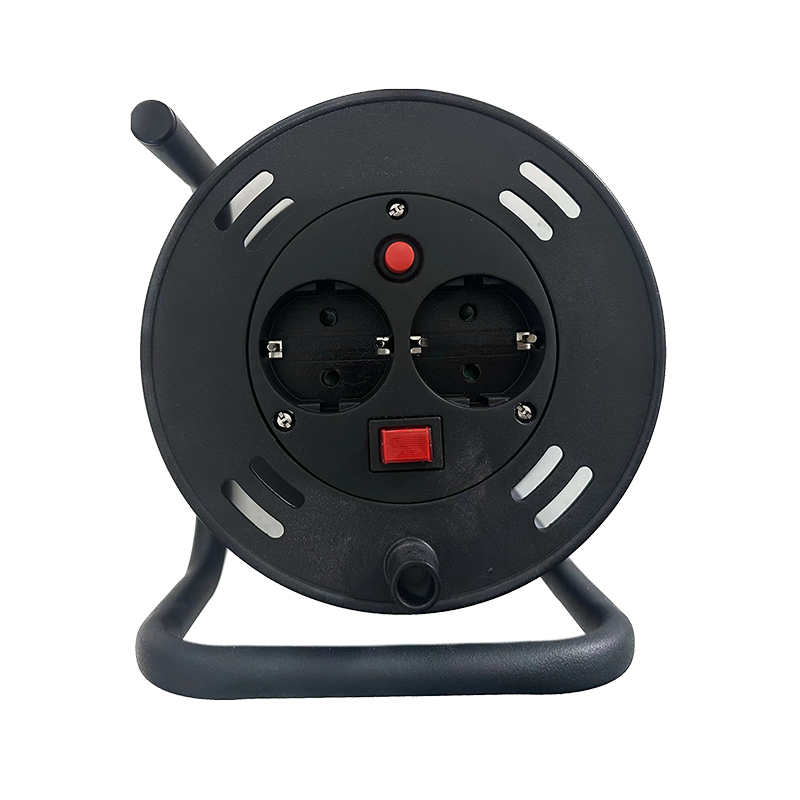
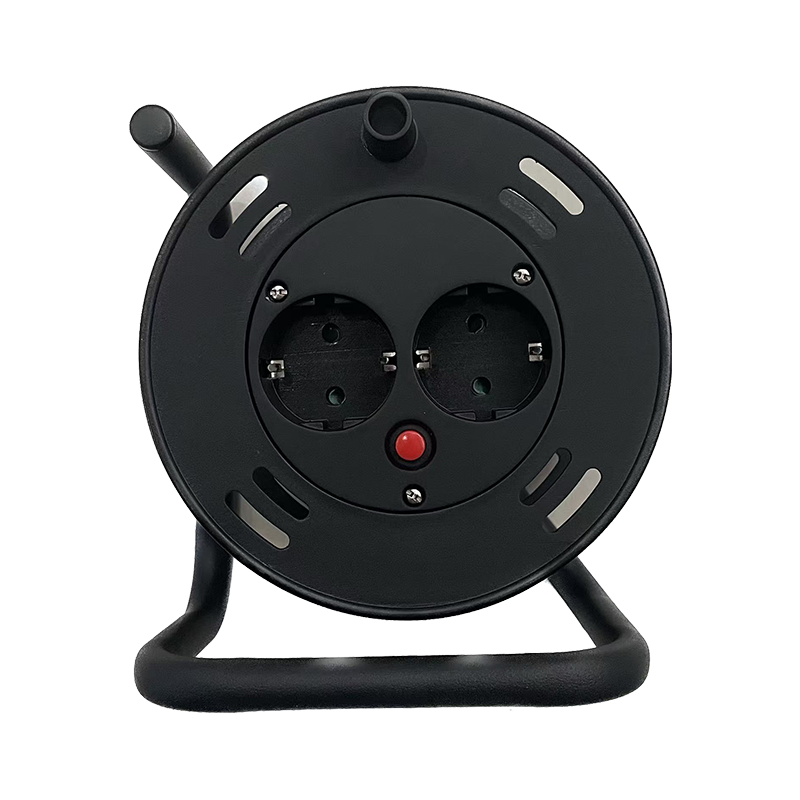
How to prevent cable knots from being tied in indoor cable reels
In various scenarios such as power, data transmission, audio and video control, indoor cable reels, as the core component of cable management, their stability and reliability directly affect work efficiency and equipment life. Among them, "cable knotting" is one of the most common and headache-inducing problems in actual use. Cable knotting not only causes cable wear, signal interference, and even causes short circuit accidents, but also seriously affects the normal use of the automatic rewinding function. In order to effectively avoid the occurrence of knotting, cable reels adopt a number of professional anti-winding technologies in structural design, guidance control, rewinding mechanism, etc.
Independent guide structure ensures orderly entry and exit of cables
High-quality indoor cable reels generally use guide arms or cable rail systems. Such devices are located between the reel and the housing and can automatically adjust the angle with the cable entry and exit direction, thereby guiding the cable to always enter the reel at the same direction and tangent angle. Avoid overlapping or job-hopping problems due to improper entry angle.
The guide structure is generally made of low friction engineering plastic to ensure that the cable does not spin due to lag during the expansion and contraction process. This spin is the main culprit of winding and knotting. Some high-end reels are also equipped with horizontal tracers, which automatically move horizontally during reeling, so that the cables are evenly arranged at both ends of the reel to prevent centralized stacking and knotting.
Rewinding tension control realizes synchronous cable retraction and release
When the cable is rewinding, if the rewinding tension is insufficient, the cable will accumulate loosely, making it easy to form annular tangle; if the rewinding tension is too large, it will easily pull the cable and wear the sheath. Therefore, indoor cable reels often adopt a constant tension rewinding mechanism, and the cables are kept under constant force during releasing through spring tension adjustment devices or electrically controlled tension regulators, which not only avoids looseness but also avoids excessive tightness and winding.
Automatic reels are usually equipped with speed limiters or buffer brakes to slow down the speed when the cables are quickly recovered to prevent the cables from being squeezed or “rolled” due to inertia. The electric reel can use an encoder to control the speed of the wire-receiving motor to achieve dynamic real-time adjustment.
Reel geometric design optimized rolling path
The reel geometry directly determines the winding path and spatial distribution of the cable. To avoid cross-entanglement of cables, an equal-diameter or variable-diameter trapezoidal coil groove structure is usually used in the design. The trapezoidal coil grooves can naturally guide the cables in sequence, reducing the squeezing and twisting caused by stacking.
Some designs also introduce "spiral guide grooves" to build a rhythmic spiral lead path inside the reel, so that the cables can be automatically arranged into the grooves in the direction of rolling, reducing irregular winding caused by human influence. At the same time, side retaining rings are provided at both ends of the reel to prevent cable from jumping to further ensure the stability of the wiring trajectory.
Matching cable flexibility index and torque characteristics
The physical properties of the cable itself are also a key factor in preventing knots. High-flex cables are not prone to permanent deformation during frequent bending, which can effectively avoid self-winding caused by memory effects. Reel manufacturers usually choose multi-stranded thin twisted conductors + high elastic TPE outer sheathed cables to balance flexibility and wear resistance.
To further suppress the winding trend, the cables used for high-quality reels need to pass the torque release test. This test simulates the cable's rebound force at different bend radii, ensuring that it does not spontaneously form kink loops in tight spaces.
Partition reel and multi-line channel design
In professional-level application scenarios, such as stage control, conference center control, computer room wiring, etc., it is very common to have multiple lines on one disk. To prevent different cables from knotting each other, the indoor reel can be designed with a multi-chamber structure or isolation guide. Each cable corresponds to an independent path, and is arranged independently through physical separation, which not only prevents winding, but also facilitates later maintenance.
The more advanced design even introduces automatic wire splitting devices, integrating wire splitting gears in the center of the reel, and adjusting the position and reeling rhythm of each cable through rotation and synchronous adjustment, greatly reducing the risk of cable mixing.
Materials and antistatic design help knotting prevention
There is another factor that is easy to ignore when tying cables - electrostatic adsorption. In a dry indoor environment, adsorption and adhesion between cables may occur due to electrostatic accumulation, inducing winding. To this end, high-quality reels often use antistatic materials and are coated with antistatic coatings on the surface of the reel to reduce charge accumulation on the cable surface. In addition, the metal reel releases static electricity through the ground lead, which can also effectively improve the risk of winding.