

 Language
 русский
 中文简体
 Español


What Are the Three Types of Sockets? Household, Outdoor and Industrial Explained
A garden-machinery importer once told us about the season that taught their team the difference between socket types. They bought a container of fully certified household extension sockets for an outdoor lighting range. The products passed every bench test, then spent a wet autumn in garden centers, and the returns started: water inside the socket, tripped breakers, corroded contacts. Nothing was wrong with the sockets. They were simply the wrong type for the environment.
Situations like that are why the question "what are the three types of sockets?" deserves a precise answer. Electrical sockets fall into three practical types: household and general-purpose sockets, outdoor and weatherproof sockets, and industrial sockets built to the CEE (IEC 60309) system. The copper inside them may look similar; the housing, the sealing, the contacts and the ratings are not. Choose by environment first, and the rest of the specification follows.
The three types of electrical sockets are: (1) household and general-purpose sockets for dry indoor use, typically 230 V at 10-16 A with IP20 protection; (2) outdoor and weatherproof sockets, gasketed or rubber-housed and rated IP44 or better for gardens, yards and exposed work; and (3) industrial CEE sockets to IEC 60309, with 3, 4 or 5 poles at 16 A or 32 A, color-coded for 110 V, 230 V and 400 V supplies.
Fixed wall sockets, rewirable assembly sockets and portable multi-way sockets for dry rooms. Schuko, French and British patterns at 10 A or 16 A, 250 V, in molded plastic housings.
Splash-protected sockets for gardens, yards and building exteriors. Rubber or gasket-sealed housings, IP44 as the working baseline, paired with rubber-sheathed cords such as H05RR-F and H07RN-F.
Site and factory power to IEC 60309: 3, 4 or 5 poles at 16 A or 32 A, keyed and color-coded so a 230 V plug cannot physically enter a 400 V socket.
What Are the Three Types of Sockets?
In electrical work, a socket is the female half of the connection: the body that receives a plug, holds contact pressure on its pins, and carries current safely onward to the cord and the appliance. That is the product family this guide deals with - the sockets a manufacturer such as Zhejiang Shuangyang Group produces for European and American markets - and within that family, the cleanest way to classify products is by the environment they serve.
If your search results showed ratchet handles and chrome fittings, those are hex, impact and spark plug sockets - hand tools, a completely different industry sharing the same word. This article covers electrical sockets: wall sockets, weatherproof sockets and industrial CEE connectors.
Why classify by environment rather than by shape or national standard? Because the environment is what drives every design decision a socket engineer makes. Three questions sort the entire catalog:
- How much current must it carry, and at what voltage?
- What will attack the housing - water, frost, UV, dust, impact, heat?
- Which approvals does the destination market expect to see on the product?
Those three questions produce the three families. A kitchen appliance cord points to type one. A garden pump on a rainy lawn points to type two. A 400 V compressor on a construction site points to type three. Standards bodies reached the same conclusion long ago: the IP code grades protection by environment, and IEC 60309 exists specifically because industrial environments demand connectors that household sockets were never built to be.
The classification also mirrors how a working factory is organized. On our own production lines, the three families share some raw materials - brass for contacts, copper strands for cords - but the tooling, the polymers, the sealing operations and the test benches differ. That separation is not bureaucracy; it is the reason a weatherproof socket keeps its rating after five years outdoors while a household socket would not.
Type 1: Household and General-Purpose Sockets
Type 1 covers every socket designed for dry, indoor, general-purpose power: the flush-mounted wall socket in a living room, the surface-mounted socket in a utility room, and the portable sockets that sit at the end of an extension lead. Across Europe they run on 230 V at 50 Hz, in 10 A and 16 A ratings. Their defining feature is what they omit: no gaskets, no drain paths, no weather rating. IP20 means the interior is finger-safe, thanks to shutters, but offers no protection against water because none is expected. Used where they belong, these are the most economical and most familiar sockets in the world.
Two-Pin and Three-Pin: Why Grounding Splits the Category
The first split inside the household family is grounding. Two-pin sockets serve Class II appliances - double-insulated devices such as phone chargers, lamps and radios that carry no exposed metal. Three-pin sockets add an earth path for Class I appliances with metal casings: washing machines, kettles, drills. The earth route differs by national pattern. A German Schuko socket grounds through the side clips that grip the plug body; the French pattern grounds through a pin entering the plug; the British BS 1363 socket combines a fused plug with shutters that only open when the earth pin is inserted. Matching the socket to the appliance class - and never defeating the earth connection - is basic, non-negotiable safety practice.
Rewirable Assembly Sockets: The Quiet Workhorse
A large share of household sockets sold across Europe are never installed on walls at all. They are rewirable assembly sockets - the connector a cord set is built on. An assembly socket supplies the housing, the contacts, the terminal screws and the cable clamp; the cord itself is added locally, cut to length and fitted with the plug pattern each national market requires. Quality here lives in small details: terminal screws that hold torque, a cable clamp that grips the sheath rather than the conductors, and contact surfaces that keep their pressure after thousands of insertions. We produce German-pattern assembly sockets in volume for exactly this kind of cord-set work, and the same logic carries across French, British and other national patterns.
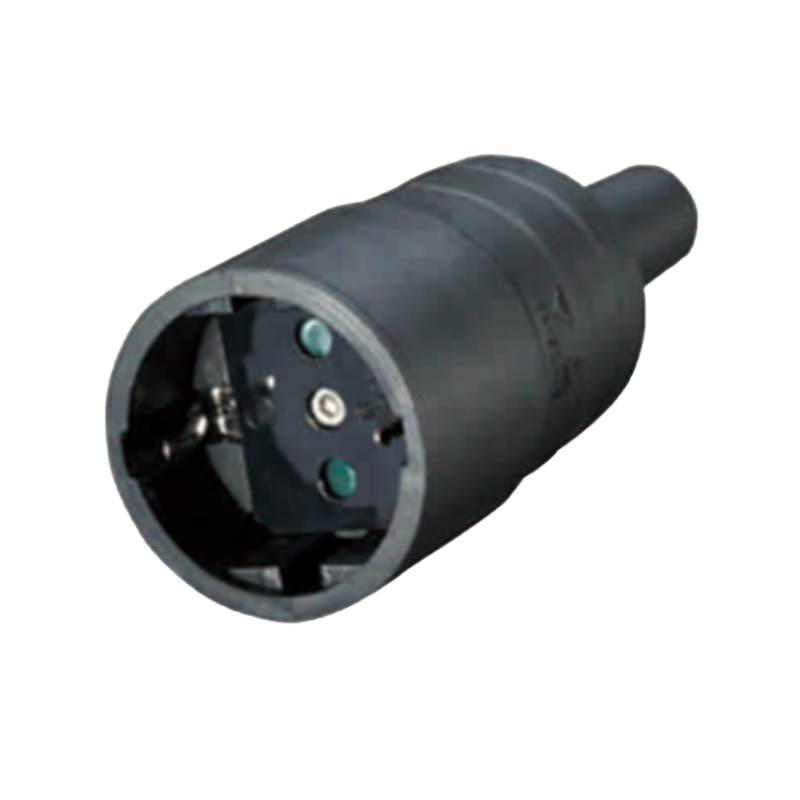 SY-CZ-32 German-Pattern Rewirable Assembly SocketA German-standard assembly socket supplying housing, contacts, terminal screws and cable clamp for local cord-set building, letting buyers stock one housing and fit cords per national market, as discussed above.View Product →
For buyers, rewirable assemblies solve a practical problem: cord standards differ by country, but connector housings do not have to. One housing program plus locally fitted cords covers multiple markets with a single stock-keeping strategy - which is why assembly sockets remain one of the highest-volume products in the category despite being nearly invisible in finished goods.
Portable Multi-Way Sockets, Timer Sockets and USB
The portable branch of the household family has grown the fastest. Multi-way extension sockets in two, four and six-way Schuko formats are the standard answer to too few wall outlets; better versions add a thermal overload cut-out that disconnects the strip before sustained excess current overheats the cord. Timer sockets bolt scheduling onto the same platform: mechanical 24-hour models use a rotating cam dial with switching steps - commonly 15 minutes - and no standby electronics, while digital weekly timers store several on-off programs per day and hold the schedule through brief power cuts. USB sockets integrate 5 V charging outputs directly into the socket body and remove a shelf full of adapters. All of these stay in type 1 unless the housing earns a water rating - which brings us to type 2.
Type 2: Outdoor and Weatherproof Sockets
Outdoors, water replaces cost as the design driver. Rain, splashes, dew, frost, UV in sunlight and the occasional knock from a hose reel all attack the same weak points: the aperture where the plug enters, the cable entry, and the seams of the housing. A household socket fails outdoors not because its contacts are poor but because water reaches them. Type 2 exists to close those paths.
Reading the IP Code Before You Buy
The ingress protection (IP) code, defined in IEC 60529, grades exactly this. The first digit covers solids, the second covers water. Two numbers every buyer should know by heart are IP20, the household default, and IP44, the outdoor baseline.
| Code | Solids protection | Water protection | Where it fits |
|---|---|---|---|
| IP20 | Objects over 12.5 mm, such as fingers | None - keep dry | Household wall sockets and indoor extension sockets |
| IP44 | Wires and objects over 1 mm | Splashing water from any direction | Garden sockets, outdoor reels, site distribution boxes |
| IP67 | Fully dust-tight | Temporary immersion in 1 m of water | Specialist connectors and sealed junction use |
One warning from decades of field returns: an IP44 rating only holds when the socket is used as rated - lid closed, cable gland tightened, cord diameter within the gland's range. A weatherproof socket with a raggedly cut cord and an open lid is, electrically speaking, a household socket with good packaging.
Seals, Materials and Strain Relief
Inside a genuine weatherproof socket, three features do the work. First, the sealing: a rubber ring around the plug aperture and a compressed gasket at the lid line, so water running down the cord and across the housing never finds a path to live parts. Second, the housing material: outdoor housings use rubber compounds or UV-stabilized plastics that stay sealed after seasons of sun, and rubber keeps its elasticity in frost where ordinary PVC stiffens. Third, strain relief: a clamp that takes any pull on the cord and transfers it to the housing instead of the terminal screws, because a tugged conductor is how contacts loosen and arcs start. We walk through the geometry in more detail in our guide to how the sealing structure of a waterproof insulated socket keeps water out.
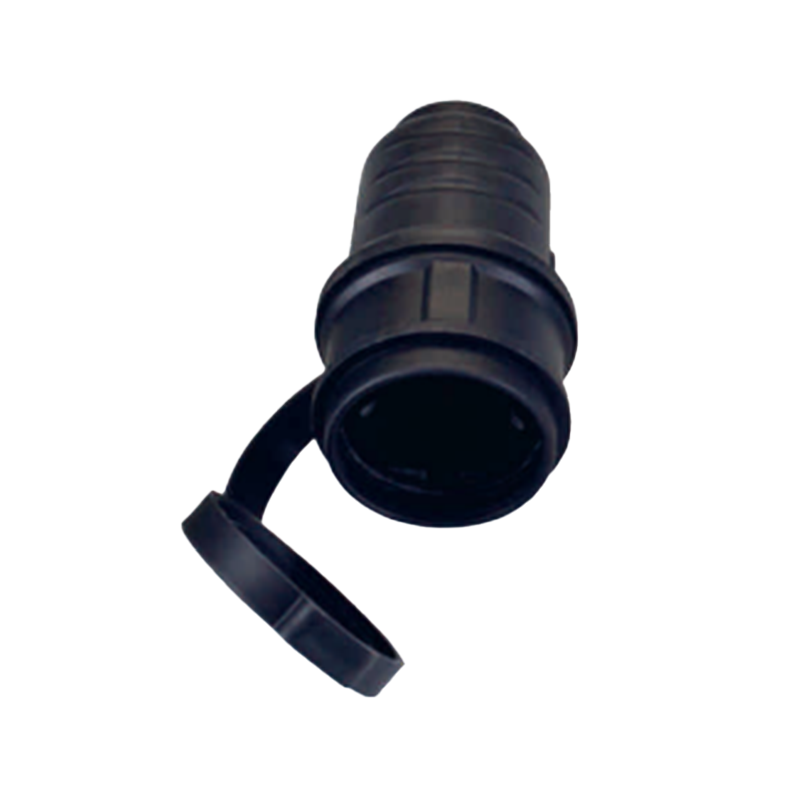 SY-CZ-29 Rubber Waterproof Insulated SocketA 16A 230V IP44 socket in a resilient rubber housing with internal insulation, suited to wet sites and outdoor power tools; rubber keeps flexibility in frost where PVC cords stiffen, matching the sealing features described.View Product →
The cords matter as much as the sockets. A rubber-sheathed H05RR-F or H07RN-F cord stays flexible at temperatures where PVC-sheathed cords begin to crack, which is why serious outdoor ranges pair IP44 sockets with rubber cords rather than reusing indoor PVC leads. The garden spike socket - a stake-mounted outlet pushed into soil for lawn lighting and pumps - and the waterproof connection box complete this family.
Where Outdoor Sockets Earn Their Keep
Typical service environments read like a gardener's Saturday: lawn lighting and pumps on spike sockets, hedge trimmers and pressure washers on rubber extension leads, holiday lighting on outdoor-rated timers, and temporary power on weatherproof cable reels. Building exteriors add facade maintenance and signage power. In all of them the pattern holds - moisture is present or likely, so protection, materials and cords are specified for wet use. Cheapening any one of the three usually shows up in the first autumn's returns.
Type 3: Industrial Sockets (CEE / IEC 60309)
Industrial sockets are a different product family wearing the same word. Standardized under IEC 60309 and known across Europe by their historical "CEE" name, they serve construction sites, factories, workshops, stages and markets - anywhere power is distributed temporarily and heavily. Ratings start at 16 A and 32 A (the full standard extends far beyond), housings are impact-resistant, and every connection is keyed so that a plug physically cannot enter a socket whose voltage or current class does not match.
The color on the handle is the fastest safety check on a site: yellow marks the 100-130 V class used for site power, blue marks 200-250 V single-phase, and red marks 380-480 V three-phase. A matching clock position - the angle of the keyway, such as the 6 h position on a 16 A 3-pin 230 V connector - repeats the same message mechanically. The purpose of the system is simple: make the wrong connection impossible rather than forbidden.
Poles, Voltages and Common Configurations
Three poles (2P+E) serve single-phase 230 V loads; four poles (3P+E) and five poles (3P+N+E) carry three-phase supplies up to 400 V. On construction sites, the 110 V yellow class is deliberately chosen for hand tools and site lighting: supplied through a centre-tapped transformer, a single fault presents a far lower touch voltage to a worker than a 230 V system. Wall-mounted industrial sockets anchor fixed distribution boards; portable plug-to-socket converters split one CEE inlet into several outlets; and industrial cable reels pair a 16 A or 32 A CEE outlet with long rubber cable for temporary distribution across a hall or a site.
Industrial timer sockets extend scheduling into this class - a 24-hour mechanical or digital industrial timer runs heaters, dryers or ventilation on a properly rated industrial socket instead of a domestic strip. For a structured tour through the variants, our guide to the different types of industrial sockets and their applications breaks down wall, portable and converted formats.
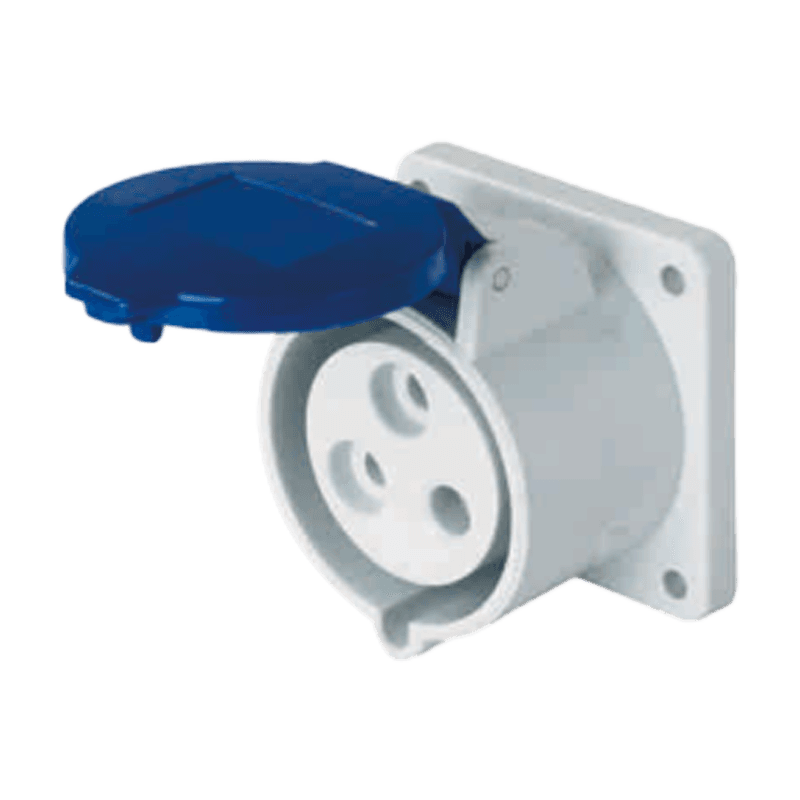 EZ51 CEE 16A 3-Pin IP44 Industrial Wall SocketAn IP44 industrial wall socket for factories and workshops connecting machinery and high-power equipment, with standardized voltage, amperage and pole options so products from different factories mate safely.View Product →
What surprises many first-time buyers is how ordinary the ordering logic feels: pick the voltage class and color, the amperage, the pole count, and the mounting format. The engineering - contact pressure, sealing, impact resistance - is already settled by the standard, which is precisely why IEC 60309 products from different factories mate safely.
The Three Socket Types Side by Side
The table below compresses the three families into the specifications buyers check first. It also explains why the families rarely substitute for one another: every row that differs is a row that fails if ignored.
| Specification | Household / General-Purpose | Outdoor and Weatherproof | Industrial (CEE) |
|---|---|---|---|
| Rated voltage | 250 V | 250 V | 110 V, 230 V or 380-415 V classes |
| Rated current | 10 A or 16 A | 10 A or 16 A | 16 A or 32 A |
| Contacts | 2-pole or 3-pole with earth | 3-pole with earth | 3, 4 or 5 poles up to 3P+N+E |
| Ingress protection | IP20 | IP44 or higher | IP44 in the standard range |
| Housing | Molded PP or ABS plastic | Rubber or gasket-sealed plastic | Impact-resistant engineering plastic or rubber |
| Matching cords | H05VV-F PVC, 0.75-1.5 mm2 | H05RR-F or H07RN-F rubber | H07RN-F or H05RR-F rubber, typically 2.5 mm2 at 16 A |
| Reference standards | CEE 7, BS 1363, national patterns | IEC 60529 IP code | IEC 60309 with color and clock keying |
| Typical applications | Appliances, home electronics, office power | Gardens, yards, exteriors, wet work | Sites, factories, events, temporary distribution |
Read the table as a chain of consequences. Environment dictates ingress protection; protection dictates housing material and seals; the load dictates current rating and cord cross-section; the national supply dictates the pattern and pole count. A purchase order that fixes the environment, the load and the destination market has, in practice, fixed almost every line of the specification.
How to Choose the Right Socket Type: A Practical Checklist
Run any socket purchase through eight checks before committing to a specification. The order matters, because each step narrows the next.
- Start with the environment, not the price. Dry indoor use points to type 1, weather exposure to type 2, site or factory power to type 3. This single decision eliminates most wrong products immediately.
- Confirm the supply: voltage, phase and frequency. A 230 V single-phase circuit needs a 3-pole product; a 400 V three-phase machine needs 4 or 5 poles; pole count follows the supply, never the other way around.
- Size the current and the cord together. Current in amps is roughly watts divided by volts. Household 10-16 A cords typically use 0.75-1.5 mm2 conductors; the 16 A industrial class uses 2.5 mm2 rubber cord; higher ratings step up accordingly.
- Match the national pattern. Schuko, French and BS 1363 plugs are not interchangeable without adapters, and CEE connectors add clock-position keying. Confirm the pattern of the destination market before ordering tooling or stock.
- Set the IP bar honestly. Occasional splash needs IP44; hosing or driving rain argues for more; immersion is a different product entirely. Over-specifying costs money, under-specifying costs returns.
- Demand the market approvals. CE is the baseline for Europe; GS and VDE carry weight with German retail; ETL applies in North America; RoHS compliance covers restricted substances.
- Inspect build quality on samples: contact material and pressure, terminal screw torque, gasket compression set, and how firmly the strain relief grips the cord sheath.
- Plan the accessories around the socket - timers, USB outputs, adapters and reels - and rate them to match the socket rather than treating them as afterthoughts.
Undersized cords and overloaded strips. Heat discoloration at terminals and around the cord entry is the earliest visible symptom, and it always traces back to a load that exceeded what the cord cross-section or the contact pressure was built to carry. Matching conductor size to rated current is the cheapest insurance in the whole category.
Materials and Construction Details That Decide Service Life
Contacts are where electricity actually crosses from one component to another, so they get engineered first. Brass and phosphor-bronze sleeves, shaped to keep constant pressure on plug pins, keep contact resistance low - and low contact resistance means less heat at exactly the point where heat does the most damage. A socket with tired contacts runs warm, discolors, and eventually burns; the material and the spring geometry are what prevent that timeline.
Housing polymers follow the environment. Polypropylene is the household default: economical, strongly insulating and dimensionally stable, though it stiffens in deep cold. ABS adds impact strength where products get knocked. Rubber compounds dominate outdoor and industrial housings because they compress to form seals, absorb impact, and stay elastic in frost - the three properties a sealed enclosure depends on.
Cord Sheaths: The Other Half of the Connection
A socket is only as durable as the cord feeding it. PVC-sheathed cords such as H05VV-F are comfortable indoors but lose flexibility near -5 °C, while rubber-sheathed H05RR-F and H07RN-F cords stay workable down to around -25 °C. That gap is why winter construction sites and unheated warehouses specify rubber across the board.
Buyers sometimes conflate insulation and sheath. Insulation is the functional layer whose failure means electric shock; the sheath is the mechanical armor whose failure exposes the insulation to abrasion, water and oil. Both are tested, but they answer different questions - which is why a cut outer sheath is a reason to retire a cord even when the appliance still works.
On sample units, ask to see the test data behind the materials: insertion and withdrawal endurance run to several thousand cycles, cord anchorage pull tests, dielectric withstand, temperature rise at rated current, and glow-wire flammability for housings. A factory with its own test center runs these in-house long before an external laboratory ever sees the product.
Beyond the Three Types: Timer, USB, EV and Garden Sockets
The three-type framework covers the field, but four specialized relatives sit close enough to influence purchase decisions - and each one inherits the rules of its parent family.
Timer Sockets
Mechanical 24-hour timers use a rotating cam dial and are almost indestructible, which suits heating schedules, aquarium equipment and seasonal lighting. Digital weekly timers store multiple programs per day, keep time through short outages, and handle cases such as security lighting that changes by weekday. Industrial timer sockets bring the same scheduling to 16 A and 32 A loads. The selection rule is simple: mechanical where robustness and price dominate, digital where programs and precision matter.
USB Sockets
USB sockets integrate 5 V charging outputs into the socket body so phones and tablets charge without wall-mounted adapters. Charging loads are small, but the mains rating of the socket should stay unchanged - a well-designed USB socket keeps its 16 A switching capacity while adding the low-voltage stage.
EV Charging Connections
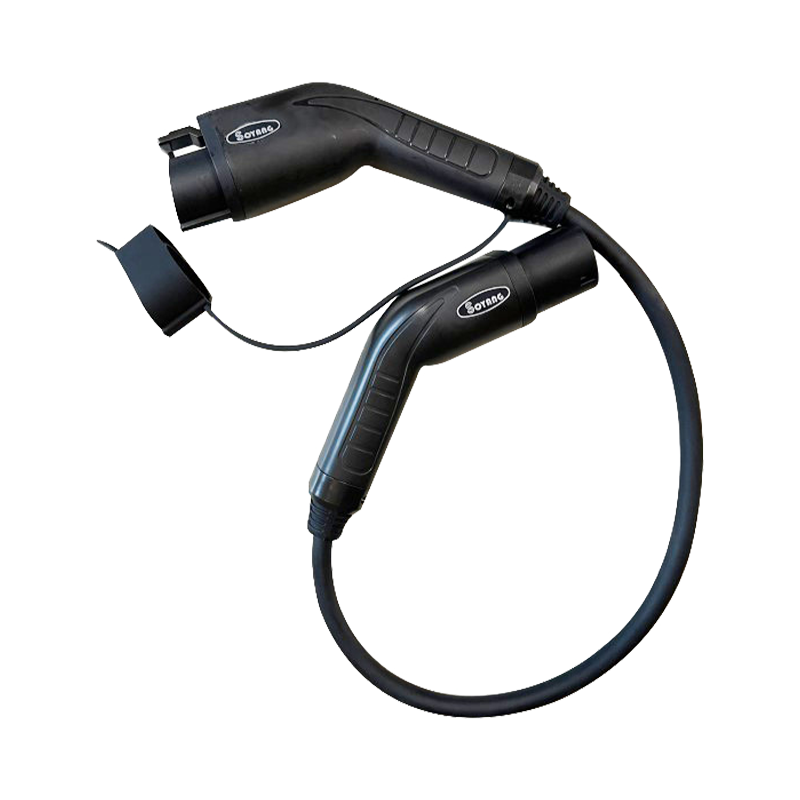
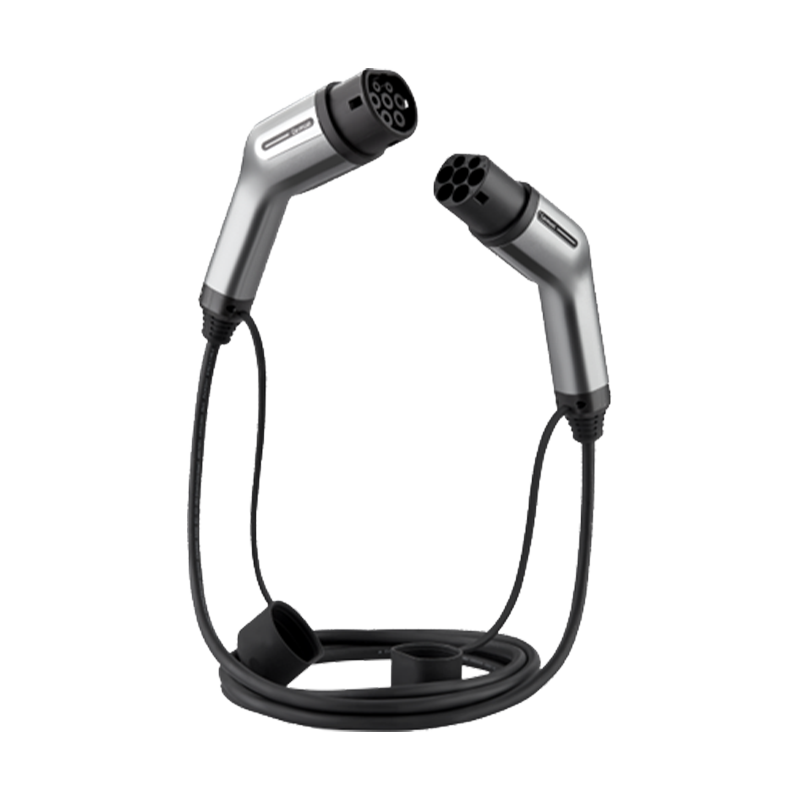
The fastest-growing relative of the socket family is the EV charging cable. Mode 2 portable cables start from an ordinary household socket through an in-cable control box that verifies the earth and limits the current to what the socket can safely deliver. Mode 3 cables with Type 2 connectors serve wallboxes and public stations, and Type 1 to Type 2 conversion cables bridge imported vehicles to European infrastructure. For regular charging, a dedicated circuit and a healthy, correctly rated socket are prerequisites - a worn household socket asked to run hours of continuous current is a heat problem waiting to happen.
Garden Spike Sockets and Cable Reels
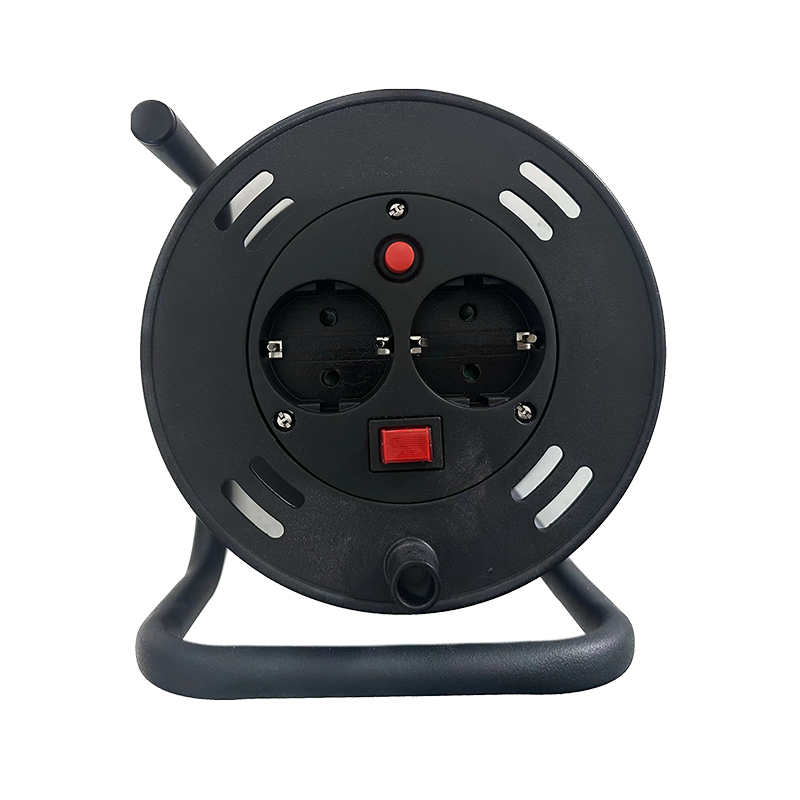
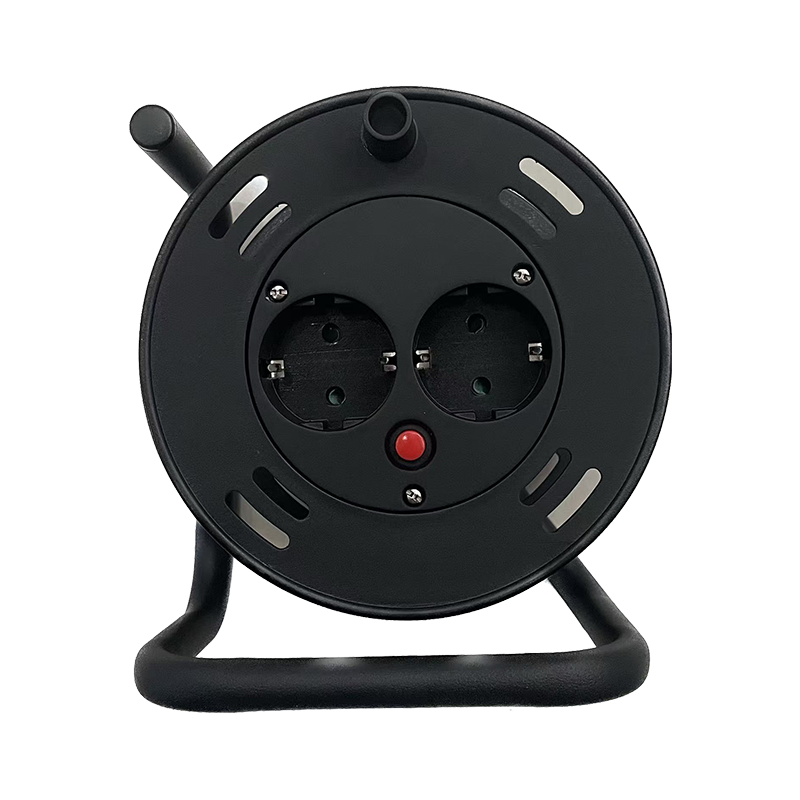
Garden spike sockets stake into soil and distribute power where lawns and beds actually need it, combining type 2 weather protection with real placement flexibility. Cable reels go further: they combine a socket platform with cord storage, many add a thermal cut-out that trips when a reel is unwound too far under load, and industrial versions carry CEE outlets at 16 A, 32 A and 380 V. Both are better understood as socket systems - housing, cord and outlets specified together - than as single components.
Certifications and Factory Testing: What to Verify Before You Order
Certification marks tell you which laboratory checked the product and for which market. In our catalog you will find CE as the European baseline, GS and VDE for the German market's expectations, ETL for North America, NF for France, S, N and D for the Swiss, Norwegian and Danish markets, plus RoHS compliance on restricted substances. The practical advice is to match marks to the shelf the product will sit on, not to collect them all for their own sake.
Behind the marks sits routine factory testing. Every production batch should pass through checks such as:
- Dielectric withstand between live parts and accessible surfaces
- Earth continuity on grounded patterns
- Temperature rise at rated current on contact points
- Insertion and withdrawal endurance over several thousand cycles
- Cord anchorage pull and torque tests on strain reliefs
- IP verification on weatherproof models with the gland and lid assembled as sold
- Glow-wire flammability checks on housings
Capability behind the marks is worth checking too:
The company operates an in-house VDE test center alongside ISO 9001, 14000 and 18000 certified management systems, which shortens the path from a buyer's specification to tested, certifiable product - particularly useful when one order spans several of the socket families described above.
Frequently Asked Questions About Socket Types
What are the three types of sockets?
In electrical terms, the three types are household and general-purpose sockets (dry indoor, 230 V at 10-16 A, IP20), outdoor and weatherproof sockets (rubber or gasketed housings, IP44 or better), and industrial CEE sockets to IEC 60309 (3 to 5 poles, 16 A or 32 A, color-coded by voltage class). The classification follows the environment the socket must survive.
Can a household socket be used outdoors?
No. A household socket is IP20: it has no sealing against water, and its plastics are chosen for indoor conditions rather than UV and frost. Outdoors it becomes a shock and fire risk. The minimum specification for any socket exposed to weather is IP44 with a sealed cable entry, paired with a rubber-sheathed cord.
What does IP44 actually mean on a weatherproof socket?
The first 4 means protected against solid objects over 1 mm, such as wires; the second 4 means protected against splashing water from any direction. It does not mean the socket survives immersion or high-pressure jets, and the rating holds only when the lid is closed and the cable gland is correctly fitted.
Are CEE industrial sockets compatible with household plugs?
Not directly - pin geometry, keying and ratings all differ, and that is by design. Rated adapters exist, for example a CEE plug wired to a Schuko socket, and they are legitimate tools when the supply, the load and the protection are understood. What the system prevents is accidentally mating a 400 V three-phase machine to the wrong supply.
Which socket type should I use on a construction site?
Follow the CEE color logic: yellow 110 V sockets for hand tools and site lighting, fed through a centre-tapped transformer for lower shock risk; blue 230 V sockets for general single-phase power; red 400 V sockets for three-phase machinery. Industrial cable reels and plug-to-CEE converters distribute from the temporary supply board.
How often should industrial sockets be inspected?
Visually before every use on site - looking for heat marks, cracked housings, damaged gaskets and loose glands. Formally, inspection intervals follow local regulation and the harshness of the environment, commonly somewhere between every three and twelve months, with contact wear, gasket condition and strain relief grip as the priority checkpoints.
If you are planning a purchase that spans more than one of these families, treat a supplier's responsiveness on samples and test reports as part of the product. A manufacturer that runs its own dielectric, temperature-rise and IP verification can usually answer a technical question in days rather than weeks - and should be willing to send specimen units so your team can check terminal torque, gasket compression and cord grip with your own hands. Every product linked in this article sits in one of the three families described here, and the same production base covers all of them, from a single German-pattern assembly socket to a 32 A three-phase distribution point.