

 Language
 русский
 中文简体
 Español


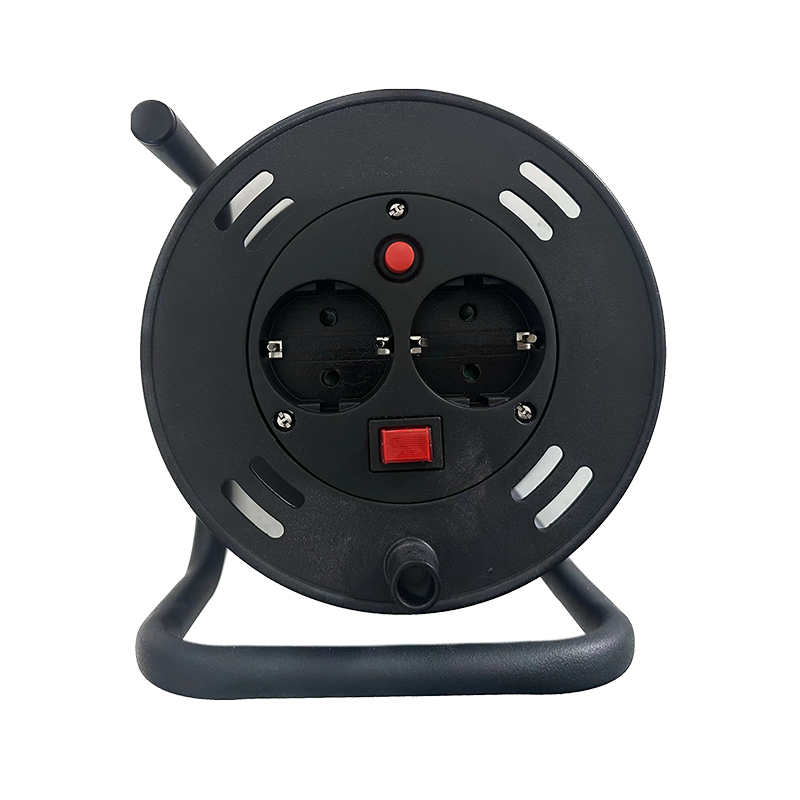
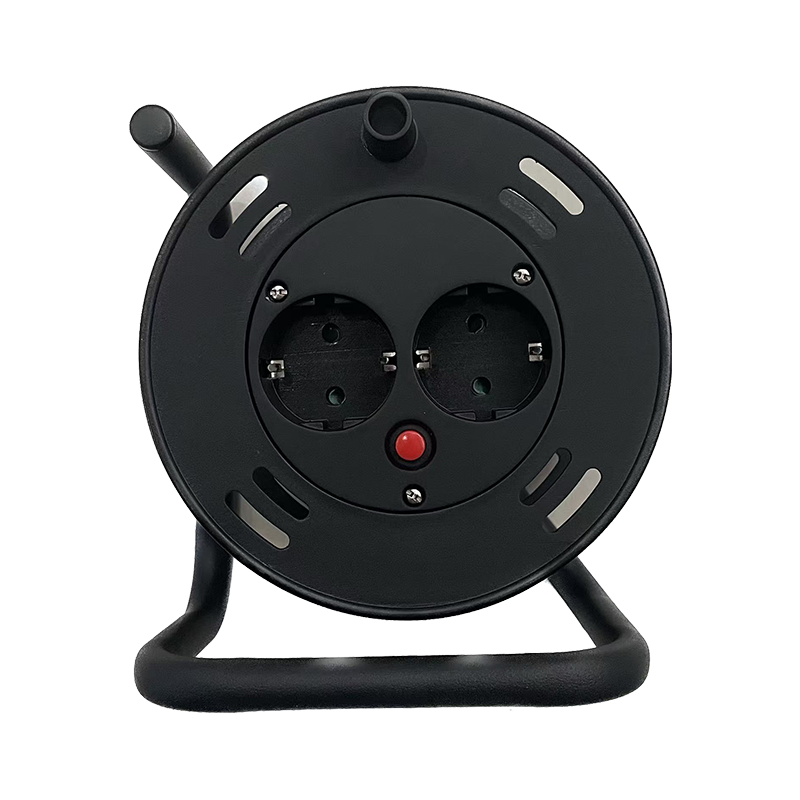

What material is used for indoor cable reels
As a key component in power wiring and signal management, indoor cable reels have a large degree of performance and durability depending on the material selection of the reel. The reel not only carries the cable body, but also determines the mechanical life, environmental resistance and safety of the entire system.
Engineering Plastics: Ideal for lightweight and insulation performance
In modern indoor cable reels, engineering plastic is one of the most common reel materials. Commonly used materials include polypropylene (PP), polyamide (PA, nylon), polycarbonate (PC), etc. This type of material is widely used in medium and low load reel products due to its good mechanical strength, impact resistance, strong processing and molding properties.
Polypropylene (PP) has good chemical corrosion resistance and heat resistance, and is suitable for general office and commercial environments. Polyamide (nylon) is outstanding in impact resistance and wear resistance and is often used in heavy-duty reels in industrial environments. Polycarbonate (PC) performs excellently in terms of transparency and dimensional stability, and is suitable for occasions where accuracy and appearance are high, such as control rooms or display spaces.
In addition, engineered plastics can further enhance their rigidity and thermal stability by adding glass fiber (GF). For example, GF30% nylon has extremely high structural stability and is especially suitable for high-frequency operations such as multiple rolling and fast telescoping.
Metal material: the first choice for high strength and high load bearing requirements
Metal reels are an indispensable option for indoor cable reels that need to withstand large cable weights or long distances. Common metal materials include carbon steel, stainless steel and aluminum alloys. Metal materials have natural advantages in strength, rigidity, wear resistance, etc., and are suitable for application environments with high requirements for mechanical load and structural strength, such as data centers, large conference rooms, broadcast equipment rooms, etc.
Carbon steel reels are usually treated with plastic spray or hot-dip galvanized to enhance their corrosion resistance. Stainless steel reels have excellent oxidation resistance and longer service life, especially suitable for high humidity or dust environments. Although the aluminum alloy reel is small in density, it has a good strength-to-weight ratio. It is an ideal material in lightweight design and is widely used in cable management systems that require frequent movement.
Composite materials: a balanced solution that takes into account performance and cost
With the development of materials science, some high-performance composite materials have also begun to be used in the field of cable reel reels. This type of material is usually made of a thermosetting resin matrix and reinforced materials such as glass fibers and carbon fibers. Its significant advantages are its high mechanical properties, excellent heat resistance and low specific gravity.
Common glass fiber reinforced polyester (GFRP) materials are close to metal levels in terms of high strength and wear resistance, while also having good electrical insulation and flame retardancy. This type of material has broad application prospects in high reliability fields such as aviation-grade cable management and rail transit station wiring.
Multi-dimensional factors need to be considered in material selection
In the actual selection of reel material, comprehensive evaluation is required in combination with specific usage scenarios. Key assessment indicators include:
Load-bearing capacity: select materials based on cable length and weight;
Environmental adaptability: environmental impacts such as humidity, temperature, dust or corrosive gases;
Flame retardant grade: whether it complies with the flame retardant standards such as IEC 60332, UL 94;
Safety insulation: Whether to ensure that the cable is isolated from the metal reel;
Frequency of use and life cycle: Whether the fatigue performance of the material is qualified after high-frequency use;
Cost and maintenance: The balance between material cost and replacement convenience.